WYSIWYG

What You See Is What You Get. This is a journal blog, an explore-blog, a bit of this and that blog. Sharing where the mood takes me. Perhaps it will take you too.
Showing posts with label Creechurs. Show all posts

Menooooooooooo....And Breathe

NB: Blogger continues to be very tardy with many of your posts... and then a whole bunch will turn up at one go, with anything from two to four of those missed posts. Beyond frustrating!!! Am I the only one experiencing this, or have any others of you had this happen? I think David mentioned it might be with him. Anyway, for those to whom I regularly comment, know that I have not abandoned you and will get there eventually! For those I only comment occasionally, know that I am still reading all your posts - just not as timely as they could be!!! (moves on with clenched jaw and gnashing of teeth...).

I mentioned last Thursday that Mac1 is over by the Clyde house-sitting and looking after Barney, the Himalayan Terrier. I took a turn at 'watch' last week, and there will be another brief visit this weekend. My sister's friend and her hubby are overseas and were happy for Mac1 to use their place as an artist's retreat... and she certainly spread herself around!


The table by the window, the main dining table, the kitchen table... and many, many bags and boxes between! Friend Annie is, herself, a creator, mainly with fabrics, but a little with paints and other media. Mac1 loves printing in different formats, using whatever she forages from the beaches and woods and streamsides... and streets... Magpies would have trouble keeping up with her! 

Anyway, other than her three-week retreat, the other focus is the pupster... and what can be seen from the wonderful back deck... I'm just going to leave the rest of this post to the photos (in no particular order)...


Menoturals: Exotica

It's that day of the week when we join in with the LLB gang and Nature Friday.

My thanks go to The Chair's human, for last Sunday we were introduced to an amazing creature that she met on her walk. (Not familiar with The Chair Speaks blog? Once a week, wanderings from the Eastern Tropics... do pay a visit!) I was so taken with the picture and the description of this snake that I just had to dig a little deeper... and found this delightful short video in which we witness the glide... Nature is just so awe-inspiring!!!

Menoducation; Another Aquarium 'Appening

This is a Nature Friday post, a day early, as it always is on the first week of the month.

Sunday, July 28th, arrived. I drove over to the aquarium carpark before breakfast in order to be sure of a spot. I was certain that it was likely to be busy, unlike previous visits, due to school holidays, proper summer, and the rock pooling event, which I had also booked myself on. It was really intended for families (i.e. kids), but hey, let out the inner child, I say! It was the correct decision because by opening time at eleven, all spaces were taken.

The rock pooling was led by Janice - who also gave the very interesting main tank talk after lunch.


It was she who was with me when I spotted the eel I 'adopted' and named Argyll. I don't have photographs of the rock pooling (except one wonky one - it'll turn up in a views post later) mainly because I had wet hands but also because there were lots of kids. I did manage some film footage, and a couple of bits will turn up on Saturday Sounds, the rest is in the latest tubular video. We had an absolutely smashing day, and the water in the pools was actually warm! Some of the families scored shrimps and starfish - I managed a Shore Crab and a Hermit Crab, as well as a Water Snail and a pretty piece of linoleum! (Unfortunately, the pretty side was facing down for the photo.)


In the aquarium, after lunch and the talk, I studied the 'shoal wall' to see what different folk had elected to sponsor and name their sea animals. There were some inventive ones...

A Cod called "Chips"

A Plaice called "Platter"


A Cuckoo Wrasse called "Wrestler"

A Tub Gurnard called "Gobble"

A Lobster called.... wait for it... "Shrimp"

For a while, I thought I was not going to be able to see Argyll, which was a little sad, as this was to be my last visit to the aquarium before it closed for refurbishment. Janice told me it is quite likely it will not be open again until at least Christmas 2025... (sad face). However, I popped back into the place ten minutes before it closed and had another gander through the glass... there he was! Tucked well down and making photography really difficult, but the glimpse was enough.


I was chatting with Hannah before I left, asking about the renos and how the fish might be affected... mostly not, they hope, and daily life will continue for them, just not being gawked at by all those faces! She had put up on the instythingy a little reel of Argyll having a swim, which was delightful. She said that quite often, when she was feeding the fish by hand, he or the other eel would swim up to her and nuzzle a bit like a dog might, and she really liked that. However, because Argyll in particular, but also the second eel, are showing signs of being more active, it suggests that they are moving into that stage of a Conger's life when they might want to take off to the Azores, where they breed... and die. This is quite likely to take place whilst the aquarium is closed, so that was probably my last sighting of Argyll altogether. Other eels will be brought in, though, so there's no reason there can't be an Argyll II. 

Anyhoo... I'll leave you with a fish I haven't shared with you before. 


Menoturals; A Mooment Of Your Time

It's FFF/Nature Friday time again, and this is when I like to present you with something just a little bit more challenging/educational/entertaining/... or at least try!


As for today's title.................
Yes, it's about cattle. Specifically, today, the very famous Highland Cattle—almost always referred to as the 'Hielan' Coo' even when it's a bull—but don't get me started on the differences between bulls and cows.

I had the perfect photo op at Drum Castle, and I know quite a few of my readers are equally fond of farm critters. 


You might look at this one above and have a question mark in your mind. Be reassured, this is most definitely a Highland Cow. She is showing true conformation back to the very original type of the breed. Black was the colour of our true cow's hair! Also, the coat is shed in the summer - for obvious reasons - thus looking less hairy and shaggy than is often seen. Now, the black may have been dominant and was certainly true of the Kyloe (the Hebridean and west coast members of the breed), but in the Highlands and toward the northeast, the coat colour tended more to brindle and dun. Genetics from interbreeding between the Highland and the Island cattle resulted in the reddish tones that, legend has it, Queen Victoria so admired. As she did admire it, and as it was considered necessary always to please QV, then farmers started to breed for specific red. Nowadays, there is quite a variety of colours to be found, and obtaining those colours is very scientific!


How, then, does one tell a bull from a cow - if one cannot see the obvious? It's all in the horns. Of course, a bull quite possibly has a nose ring, which is a bit of a giveaway. Many don't, though. So look at the head. The brow/crown will be quite a bit stronger and squarer than that of a cow, and the horns will be set at a downward angle. The cow horns are set either straight out or upward and it is rare indeed to find a cow with down-turned horns.


Did you know that a gathering of Highland Cattle is not referred to as a herd, like other cattle, but as a FOLD? This dates back to when the beasts were brought into 'the fold', a circular drystone-walled pen, for protection from severe weather and wolves.

Highland Cattle are very hardy, and most weather doesn't bother them, nor does rough, high ground. They are actually very good conservation animals, browsing the hillsides in a manner that propagates natural species growth and helps to maintain the environments in which they graze.

They are also considered to be generally very good-natured and relatively easily handled. This is why quite a lot of farmers' wives and children like to keep at least one or two as pets and for showing. Of course, like most farm animals, the fate of the majority is to provide milk and meat...


If you would like to look at even cuter photos than these (and significantly better quality), then do pop over to the Highland Cattle Society page!

Menootanabootery; Could A Birthday Get Better?

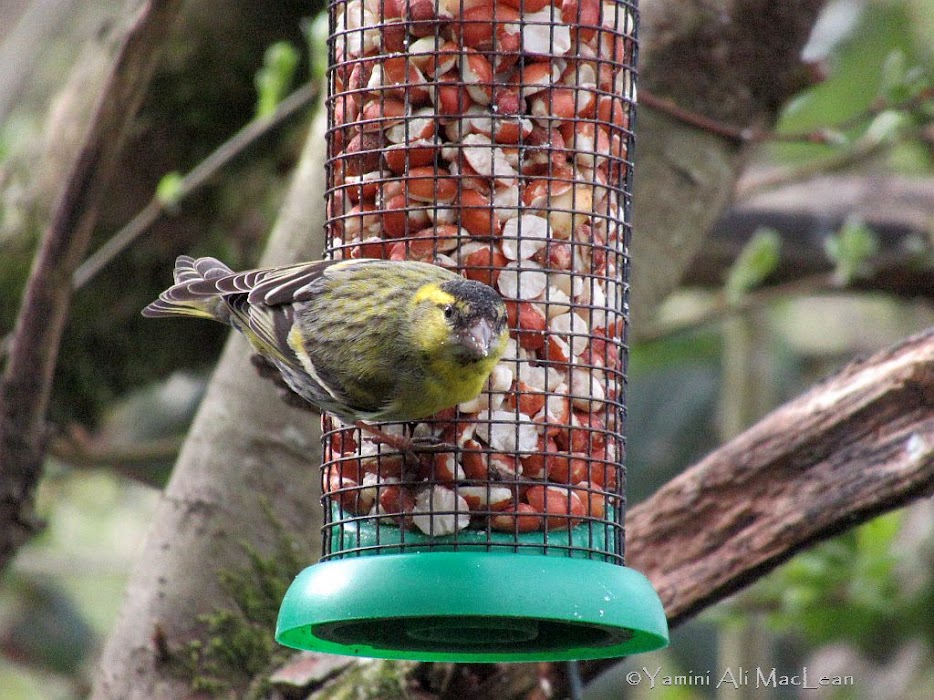
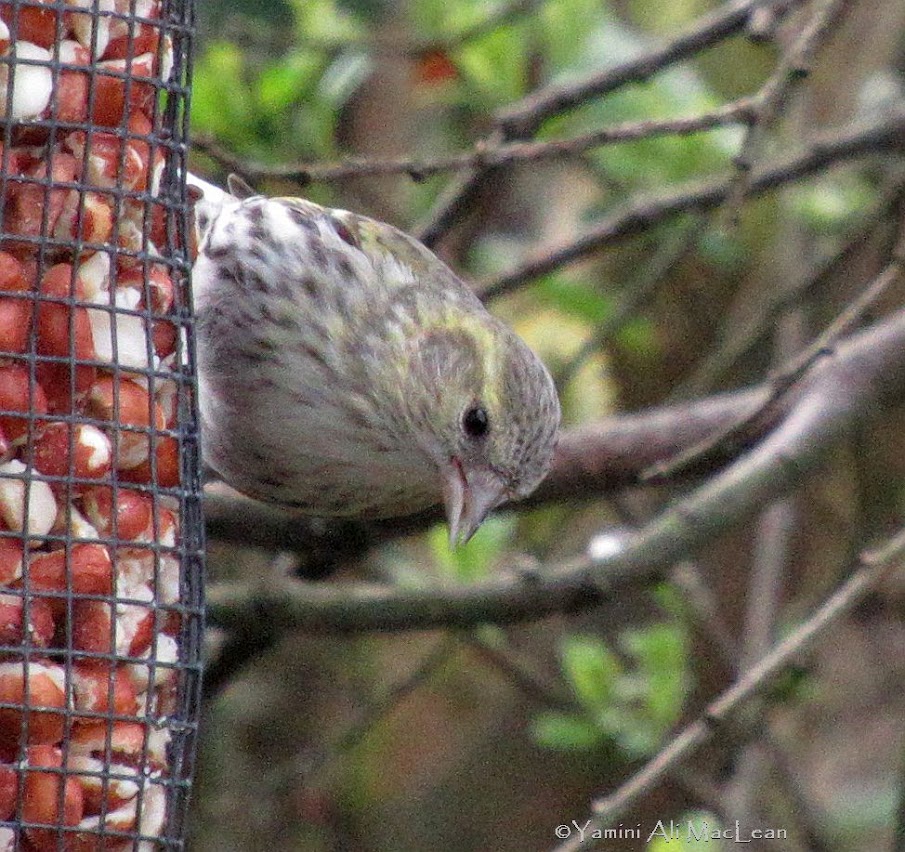
Turns out it could! As Aitch mentions in her own post about her trip, there were to be bird sightings that I had longed for all my years here - and finally, it turned out there were entire flocks of the SISKINS! On resettlement in the Bonny Land, I had been given to understand that these were elusive wee things... and, indeed, I had not until this very time seen more than a couple of them. Which went against the apparent 'green status' given. However, on the geocaching day out, we spotted some as we left Jubilee point, and I got just a tad excited. I only managed one really decent photo, though.


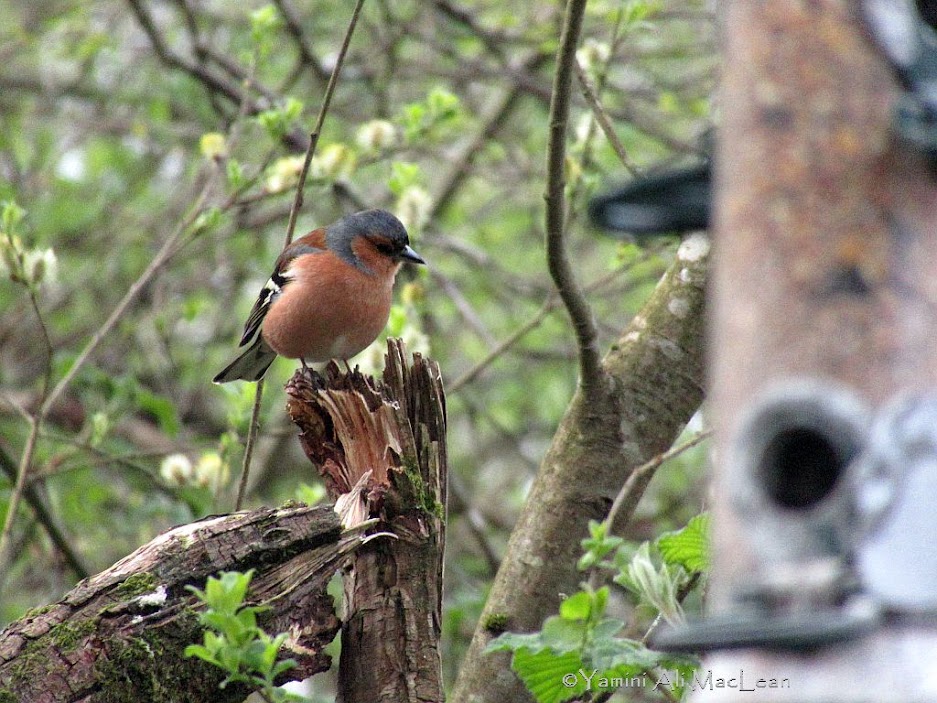
There were a couple of Robins flitting about, too, but also many Chaffinches...


As we drove back into Dunoon from our Kilmum visit, I asked Aitch to stop at the Holy Loch layby, where there is an information board I have always meant to read for myself - and there was a geocache for us to find! Reading the info board - beyond all the bird details with which I was familiar, I learned two historical facts that had escaped me till now...


The quest for the geocache also caused me to look wider than the picnic point, for I had not realised there was a community garden hidden in the woodland to the side (not Broxwood). A very decent path was laid out, and the cache proved to be quite close to the start of the thing. Having notched that one up, we decided we would like to wander the path further and see what it might reveal. 

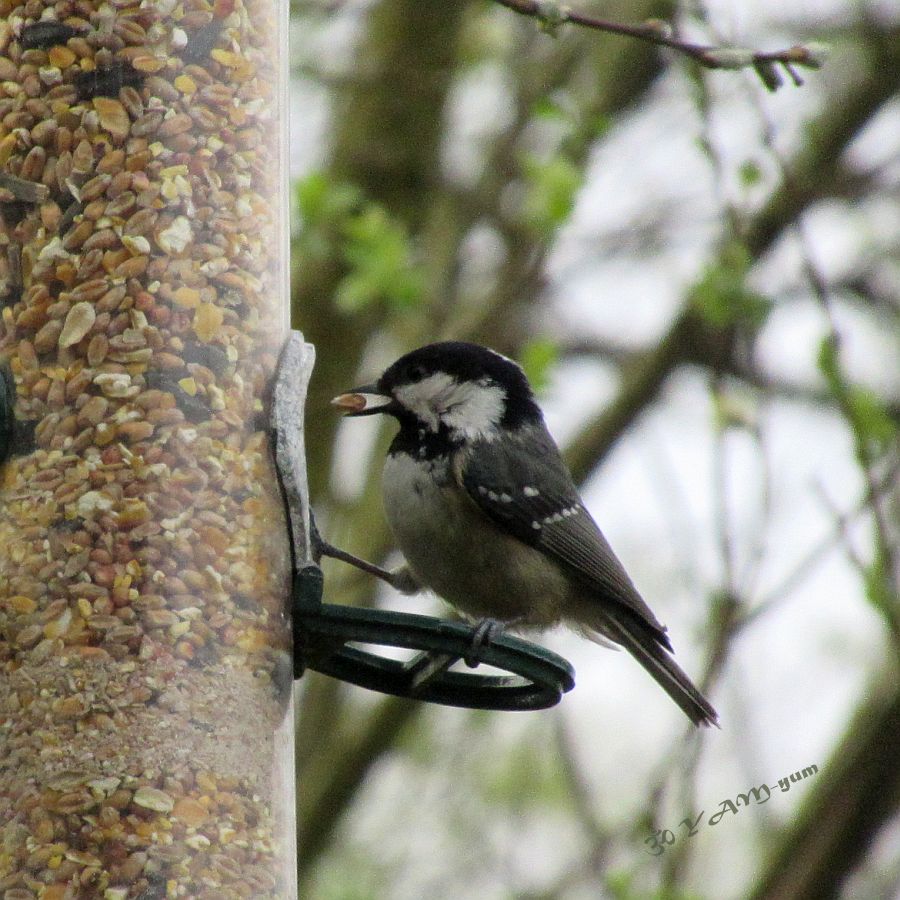
Well!!! Turns out there is a bird hide at the end, with feeders and views to satisfy all comers. (The view back to Kilmun you see on Tuesday's views post was taken from here.) To say I was almost squealing with excitement would have you believe my birthday marked three years and not plus sixty! Truly, a toddler treated with a toy might not have been as thrilled... I am easily entertained. As a life-long birder, though, it has been so long since I had decent bird watching (over the endless numbers of gulls and pigeons seen from the Hutch's windows). To be blessed with a friend who was willing to indulge my need to sit for half an hour and revel in the antics of the Siskins, Chaffinches, Great Tits, Blue Tits and Robins... well, it amounted to having icing on the cake and eating it!!! The only thing that would have made it any better would have been the appearance of some wading birds - but we were 'between shifts' for that. 


Suffice to say I had a birthday to remember! After two days of lengthy outings and no small amount of walking, my limbs and back could certainly feel the effects, but there was a depth of joy that acted as a salve. 

Aitch had to depart on the 27th, but not before we had a lingering breakfast/brunch, starting with fruit and yoghurt and culminating in a vacon and banana with scrambled eggs plateful! Had to make sure my pal didn't faint on her long drive home to the cottage in the close!


Next week is FFF time again!!!


Menotwittering; No, Not That...

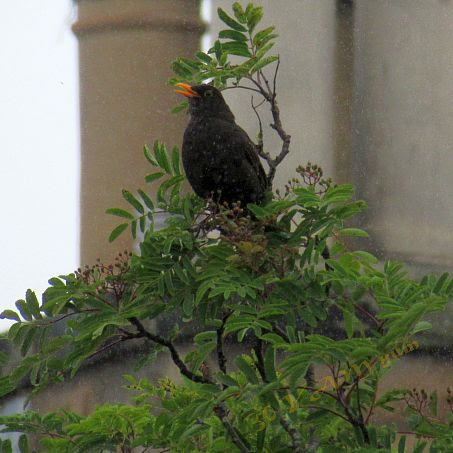
British garden birds are renowned for their sweet voices - most of them. One of the best is the Blackbird. The male is the dominant singer, the female saving her voice for emergencies. They are quite territorial and if you have one take up residence in your garden, then you are likely to see it raise a family or three.

Every evening, almost without fail, our local bloke sits high and serenades us. The other night, in spite of the rain, he was it handsomely!


I found a recording (though it is actually taken in Denmark!) Do enjoy it...

Menosukhi Monday; Fletcher Pupdate 3

Having had a couple of wee interim messages to allay any fears that Fletcher might be going to flunk, things are definitely looking good per this third update from his handler.


Menoffagainorrhoea; Suffolk Sojourn Day One

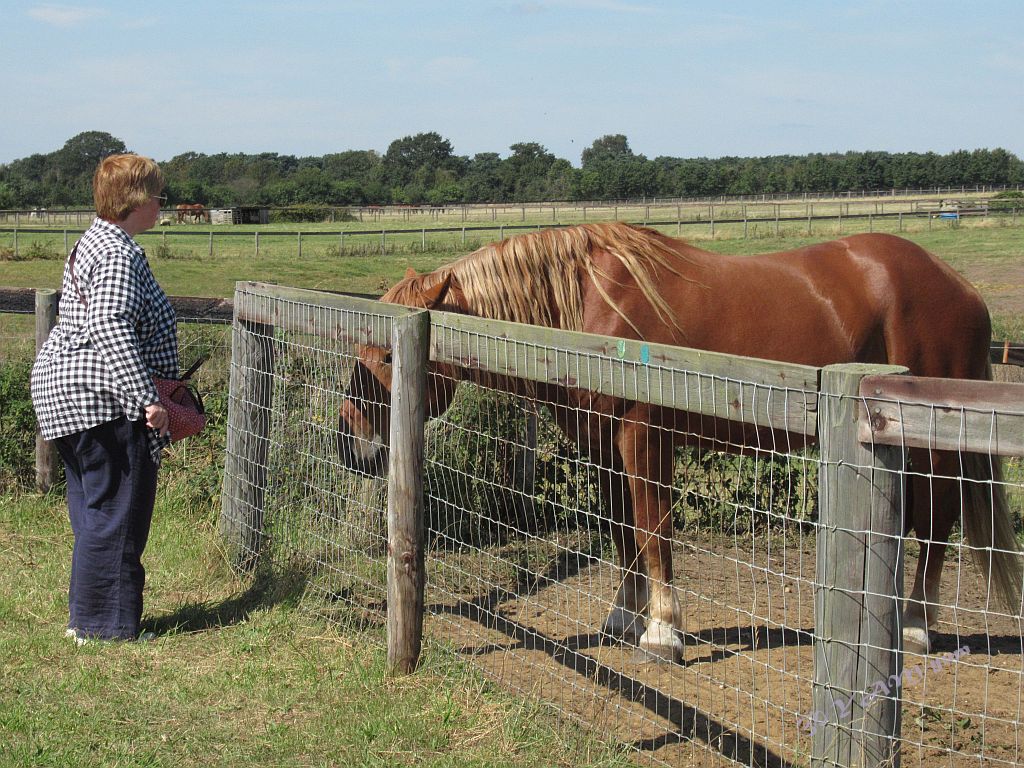
The Friday dawned very bright and very warm. SUMMER!!! Aitch and I had tossed a couple of ideas around for things to do with the day, and it was settled that the Suffolk Punch Trust out near the coast was the thing to do. Her friend Cx was set to join us, and we made a joyful trio on an adventure.

We parked in the paddock in front of the relatively new 'meet and greet' entry hall, wherein was the reception, a cafeteria, shop with some beautiful artisan gifts and a little museum area. Having paid our dues, we wandered first to the stables, to get up close and personal with whoever was in.

This is Gypsum - she is a Red Poll, another Suffolk native breed which is under threat.
Colony Eli was born only eighteen months ago. It was hot in that stable, and he was quite snoozy.
He and I did a bit of 'whuff-whuff' with our noses though. Sweet boy!
No, not a Shetland... this is a miniature horse. Okay, now I can hear you asking, "What's the difference?!"
Both these have small bodies, but Shetland ponies could be slightly taller than Miniature horses.
It is a compact and muscular body in Shetland ponies, but not in Miniature horses.
The neck is shorter in Shetland ponies compared to Miniature horses.
Shetland ponies have rough, long, and prominent manes and tails.
However, Miniature horses have smooth manes and tails.
The coat of the Shetland pony is rough and thick, but the coat of the miniature pony is smooth.
Their uses are different, as Miniatures are more like indoor pets,
but Shetland ponies are outdoor workers.
This is Colony Aspall, who had just completed an earlier demonstration and was enjoying his oats!
...and this GORGEOUS boy is Besthorpe Achilles.
What mare wouldn't fall head over tail for his attention?!
There is also the oldest registered colony of the Suffolk Sheep, pure line.

That lovely boy on the right (the four-legged one ... tsk...) is Colony Xing ("Star"). He - and the humans - demonstrated the livery which needs to be worn by working horses. During the dressing of the leather and chains, the other lovely boy (whose name we didn't get, sadly) gave an excellent running commentary on the history of the horse, how they are trained almost from birth, with the rope halter first, and what types of work was expected of them.

The SP was critically endangered, and the Trust is working hard to reinvigorate the bloodlines.

Nowadays, drawing activities are pretty much for show purposes, but some of the SPs are being trained for the saddle. Adapt and survive!

Do read the Trust's website; lots of lovely photos if nothing else!

This was a long post. There is lots more to come, but some days will have to be split into two.